Do you feel overwhelmed by the complexity of your marketing campaigns?
Marketing teams juggle emails, social posts, ad campaigns, and lead nurturing at the same time. This can lead to mistakes and missed opportunities.
The good news is that marketing automation in 2026 is more advanced than ever. In fact, marketers lose up to 20% of their potential revenue each year. This happens due to fragmented workflows and inefficient processes. For a mid-sized company, this inefficiency can easily mean missing out on $2 million annually. (20% of Software Budgets Wasted on Unnecessary Business Complexity, Freshworks Survey Finds, 2025). New AI insights can help you recover this lost revenue. Better customer journey tools will help you unlock new growth opportunities. By streamlining your operations, personalizing experiences, and getting better results, the payoff is sharper and more tangible than ever. To get started, audit your current marketing workflows. Identify one process that takes the most time or is prone to errors. Focus on automating this area first. This strategy will help you see results more quickly. It will make the impact of smarter automation immediately visible.
Here are some effective ways to leverage these marketing automation trends.
Step 1: Embrace AI-Driven Marketing Automation
AI is now a must-have and forms the backbone of today’s marketing automation.
Why AI Matters
- Predicts the best time to send messages
- Personalizes content dynamically
- Analyzes campaign performance in real-time
- Identifies high-value leads automatically
Key Tips for AI Integration
- Use predictive analytics for lead scoring to connect with each prospect at the right time with the right offer. Tools like Salesforce Einstein, HubSpot, or Adobe Sensei can help you automate lead scoring. They enhance the process with AI-driven insights. This ensures that your team never wastes a prospect’s time. It demonstrates respect for their interests. It also increases the chance of genuine engagement.
- Test AI-created content variations
- Combine AI insights with human creativity.
- Monitor AI performance and adjust thresholds.
AI-powered marketing automation helps you work more efficiently and get better results. For example, Revulytics used AI to analyze user reading patterns. They optimized the timing of emails. This approach increased their open rates by 44% over six months. This demonstrates how smart automation can deliver real results. (Case study: marketing agency boosts reply rates 5x with AI personalization, 2024)
Step 2: Map and Automate the Customer Journey
To automate successfully, you need to understand your customer’s journey clearly.
Steps to Automate Customer Journeys
- Map every touchpoint from first click to purchase
- Identify critical conversion moments.
- Segment audiences based on behavior and engagement
- Trigger personalized messages at each stage.
Pro Tips:
- Use behavior-triggered workflows (e.g., abandoned cart emails).
- These emails target customers at key decision points. They can also boost your sender reputation and improve your email deliverability scores. By sending timely, relevant messages, you reassure shoppers that you haven’t forgotten about them. This sense of personal attention nurtures trust. It makes customers feel valued. It also signals to inbox providers that your messages are important. As a result, more of your emails reach their intended audience.
- Align campaigns with lifecycle stages: awareness, consideration, decision.
- Regularly refine based on engagement analytics.
Automating the customer journey helps you send the right messages at the right time, every step of the way.
Step 3: Integrate Cross-Channel Marketing
By 2026, marketing will bring together email, social media, SMS, paid ads, and web channels. Imagine a campaign where a clothing brand starts on TikTok. They showcase a new product line with short, engaging videos that capture attention. Interested viewers who engage with the post are retargeted through Instagram ads that offer a special discount code. Next, customers who click through but don’t complete their purchase receive an automated SMS reminder with their personalized offer. Automation guides each step. The customer moves seamlessly from discovery to purchase. They experience a connected brand story across channels. In a recent campaign using this TikTok-to-Instagram-to-SMS flow, a retailer saw a 17% increase in average order value. There was also a 22% lift in conversion rate compared to single-channel campaigns. (Alabiso, 2021) These numbers show just how powerful integrated, automated experiences can be for driving real business results.
To set up a similar cross-channel workflow, first choose a marketing automation platform. Ensure it supports multi-channel integrations. Options include HubSpot, ActiveCampaign, or Salesforce Marketing Cloud. Connect each channel (email, social, SMS, paid ads) to the platform using available integrations or APIs. Map out your desired customer journey and set up triggers to automate handoffs between channels. Set a rule to retarget users on Instagram after TikTok engagement. Create another rule to send an SMS when a user clicks an ad but leaves items in their cart. Test each integration. Monitor performance at every step. This approach will help ensure your channels work together seamlessly. It also makes it easier to replicate this success in your own campaigns.
Best Practices for Cross-Channel Automation
- Consolidate data from all channels in a unified platform.
- Create consistent messaging across touchpoints.
- Automate triggers across channels (e.g., email follow-up after social engagement)
- Measure engagement holistically
Cross-channel automation helps you share a consistent message across channels, building trust and boosting conversions.
Step 4: Optimize Segmentation and Personalization
Personalized segmentation is now the standard, replacing generic, one-size-fits-all campaigns.
Advanced Segmentation Tips
- Combine demographics, behavior, and AI predictions.
- Be transparent about how data is used and always allow customers to opt in to personalized experiences. Communicate the value they will receive in exchange for sharing information, such as more relevant offers or exclusive content. This helps ensure that micro-segmentation feels helpful rather than invasive and builds trust in your brand. Be sure to follow data privacy standards and regulations, like GDPR and CCPA. Inform customers about their data rights. Honor their preferences to opt out. (Comparing privacy laws: GDPR v. CCPA, 2025) Keeping compliance in mind reassures both customers and internal teams that your segmentation strategies meet the highest legal and ethical standards.
- Use dynamic content to personalize emails and landing pages.
- Implement micro-segmentation for high-value leads.
Example:
Instead of sending a generic promo email:
- Send offers tailored to browsing history, location, and purchase intent.
- Adjust messaging dynamically based on engagement.
Good segmentation and personalization are key parts of successful marketing automation.
Step 5: Monitor, Test, and Refine
Automation is powerful, but it needs regular attention and fine-tuning. Continuous Optimization Tips
- A/B test subject lines. Also A/B test CTAs and workflows. Focus on learning which messages help customers take action more easily. Aim for less friction. Center experiments on customer success. This ensures every test is purpose-driven. It makes your experiences clearer and more effective for your audience. For example, connect each test to an OKR or strategic objective to keep experimentation purposeful rather than random.
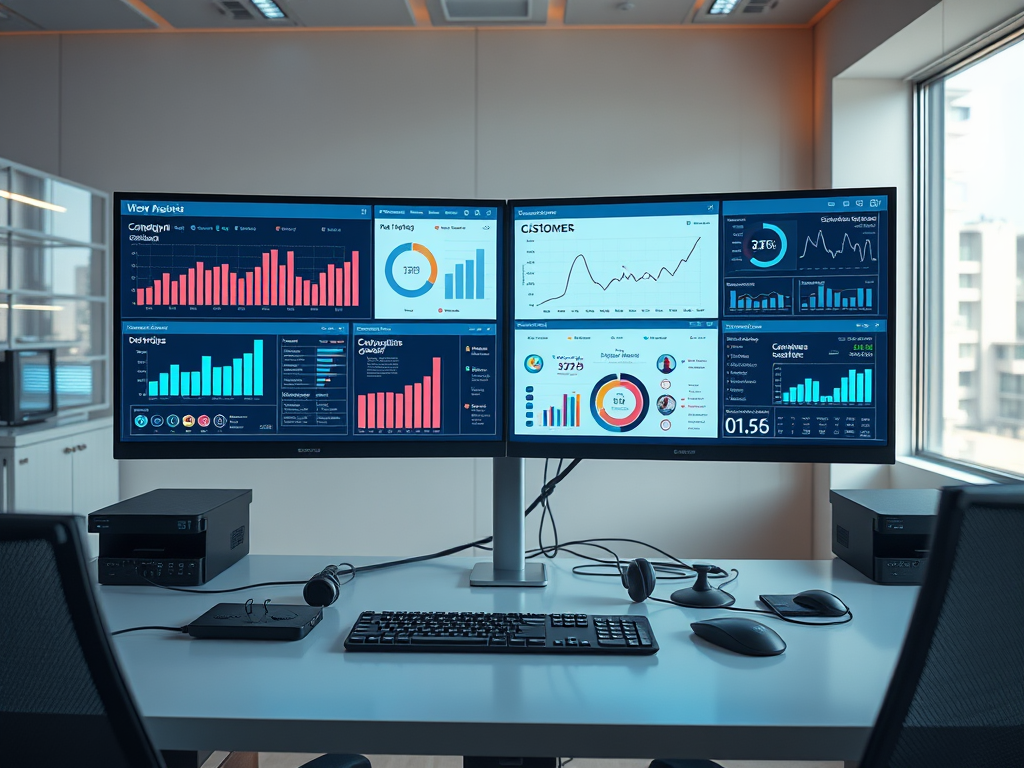
- Monitor KPIs like open rate, conversion rate, and ROI. Set up automated reporting dashboards. Use tools like Google Data Studio, Tableau, or your marketing platform’s built-in analytics. These tools help visualize performance metrics at a glance. Schedule regular automated reports to be sent to your email. This way, you and your team can quickly spot trends. Make adjustments as needed. Use AI insights to adjust campaigns in real-time for ongoing optimization.
- Clean and update your database regularly. Link every test to your team’s key results or objectives. This ensures your optimization efforts are strategic. It also helps drive the results that matter most. Testing and making improvements help your marketing automation deliver real, measurable results.
Step 6: Leverage Predictive Analytics for Smarter Decisions
Predictive analytics lets you stay ahead of customer behavior and improve your campaigns before issues arise. Still, the real advantage comes when you turn those predictions into “next best action” recommendations for your team. This approach helps you move from data to action. You always know which step to take for each customer. This is true at every stage.
Ways to Use Predictive Analytics
Identify the next best action for each contact. You can send a follow-up email. Another option is offering a targeted promo. Alternatively, you can trigger a retention message.
- Forecast engagement and conversion trends, detect possible churn risks, and trigger retention workflows. Maximize content delivery timing and channels. With predictive analytics, you can put data-driven action plans in place. This enables your team to respond quickly with the most relevant message or offer. It makes your customer journey automation proactive. This is effective in driving revenue growth.
Step 7: Maintain Human Oversight
Automation doesn’t replace people; it helps them do their jobs better. Only humans can truly understand a customer’s emotion or craft an idea that sparks genuine excitement. The irreplaceable skills to safeguard are storytelling, humor, and cultural nuance—elements that AI cannot fully replicate. These uniquely human abilities allow you to connect deeply with your audience. They help create memorable brand moments. They also help navigate subtle shifts in trends or tone. While automation handles the busywork, your empathy and creativity are what set your marketing apart.
Key Tips: Review AI-generated content before launch.
- Preserve brand voice across automated campaigns. Combine creative strategy with analytics-based insights.
Having people involved keeps your campaigns authentic, relevant, and effective.
Final Thoughts: Smarter Automation = Better Results
In 2026, marketing automation aims for both efficiency and strong results. By using AI, mapping customer journeys, personalizing, and testing often, you can run more effective campaigns.
Start small, follow best practices, and grow your efforts as you go. To put these ideas into motion, choose one workflow to automate this week. You will see firsthand how much easier and more impactful your marketing can be. The tools are ready, so now is the perfect time to improve your automation strategy. To keep learning, explore resources like HubSpot Academy’s Marketing Automation Certification. Deepen your expertise with the Marketo Blog and Salesforce Trailhead. Attend regular webinars from platforms such as ActiveCampaign or MarTech. Follow industry thought leaders. Engage in continued learning. These actions will help you stay ahead of new trends. They will maximize the benefits of smarter automation.
References
(November 9, 2025). 20% of Software Budgets Wasted on Unnecessary Business Complexity, Freshworks Survey Finds. Freshworks Inc..
(2024). Case study: marketing agency boosts reply rates 5x with AI personalization. Damulo.
Alabiso, A. (2021). Proven Strategies for More SMS Marketing Conversions. Semaphore Blog.
(2025). Comparing privacy laws: GDPR v. CCPA. DataGuidance.
Leave a Reply