The uncomfortable truth is that marketers are feeling the shift firsthand.
Organic traffic is slipping. Rankings that once drove leads now stall out. Even when you follow SEO best practices, your content can get sidelined by AI-generated answers that leapfrog traditional results.
Sound familiar?
The reality is, search behavior is evolving faster than most teams can adapt. Traditional SEO still matters, but it’s no longer enough to drive sustainable growth on its own.
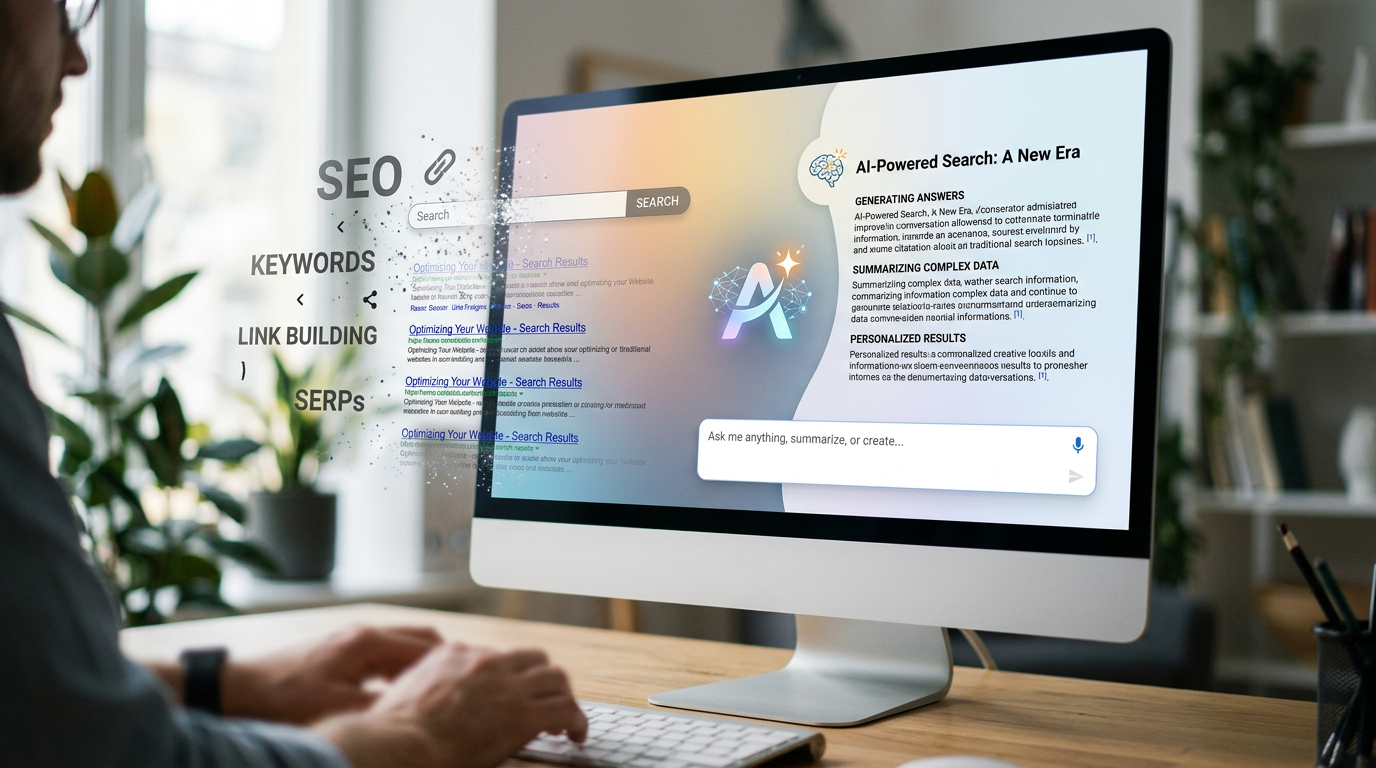
Let’s break down how GEO is starting to overtake SEO, driven by the rise of AI-powered search (think generative engines, conversational discovery, and zero-click results that change how users find answers). For example, imagine someone searches for ‘best project management tips’ using an AI-driven search assistant. Instead of clicking through to multiple blog posts, they instantly see a summary generated by the AI that pulls key advice from trusted sources—along with a direct mention or quote from a brand whose content is cited as authoritative. In this scenario, traditional rankings matter less; it’s the brands that appear in the AI’s answer that get noticed and win trust.
The upside: if you adapt now, you don’t just protect your visibility—you put your brand ahead of the curve.
What Is GEO (Generative Engine Optimization)?
And why is everyone suddenly talking about it?
GEO, or Generative Engine Optimization, is about shaping your content so AI-powered search engines select, summarize, and cite your expertise in their answers.
Instead of ranking #1 on a results page, your goal is now:
- Getting your insights referenced directly in AI-generated responses
- Positioning your brand as a trusted source that AI models recognize
- Structuring your content so machines can instantly interpret and extract value
Key difference:
| Optimizes for rankings | Optimizes for inclusion in AI responses |
| Focus on keywords | Focus on meaning, context, and authority |
| Click-driven | Answer-driven |
| SERP visibility | AI interface visibility |
Is SEO Dead?
Short answer: No. But it’s evolving fast.
SEO is still the foundation, but it’s no longer enough to win visibility on its own.
What’s still relevant:
- Technical SEO (site speed, crawlability)
- Structured data/schema
- Keyword intent mapping
- Building authority through links and brand signals
What’s losing impact:
- Over-optimized keyword stuffing
- Thin, repetitive content
- Ranking-focused strategies without value depth
The bottom line: SEO is your technical infrastructure. GEO is the strategic layer that drives growth in the new search landscape.
Why GEO Is Replacing SEO (Whether You’re Ready or Not)
The rise of AI Search
AI-powered search experiences are changing how users interact with information:
- Users ask full questions, not keywords.
- They expect instant answers, not links.
- AI aggregates multiple sources into one response.
What that means for you:
- Expect fewer clicks and tougher competition for every moment of visibility.
- Brand authority matters more than ever.
- Your content needs to be both machine-readable and genuinely useful to real people.
Here’s a practical, six-step framework you can put to work right away. Each step is clearly numbered below to make implementation easier for your team:
Step 1: Shift from Keywords to Intent Clusters
Move beyond isolated keywords. Focus on the broader topics and real questions your audience is asking. Instead of:
- “digital marketing strategy”Think:
- What problems is the user trying to solve? What follow-up questions will they ask?
Tip:Build your content around question trees instead of single keywords.
*Step 2: CreateAI-Friendly” Content StructuresAI models reward content that is clear and easy to extract insights from.
Structure your content like this: Clear headings (H2, H3)
- Direct answers early in sections, bullet points, and lists
- Concise explanations,
Example elements AI loves:
- Definitions Step-by-step guides
- Comparisons FAQs
*Step 3: Build Topical Authority (Not Just Pages)A single blog post is no longer enough to build authority.
You need a content ecosystem that covers your topic from every angle. Do this:
- Create pillar content and supporting articles. Cover a topic from multiple angles.
- Interlink your content strategically to reinforce topic depth. The goal is to become the go-to source that AI search engines reference for your area of expertise.
Step 4: Optimize for Citations, Not Just Clicks
AI Search pulls from sources it trusts. To increase your chances of being cited:
- Use credible data and references. Include original insights or frameworks.
- Maintain consistent publishing authority. Pro tip:
- Original perspectives and insights consistently outperform generic summaries.*
Step 5: Leverage Structured Data and Semantic Signals. Search engines and AI models need clear signals to understand and trust your content.
Implement:Schema markup (FAQ, Article, How-To)
- Clear entity associations (brands, topics, authors), consistent terminology
Step 6: Strengthen Brand Signals
In the world of GEO, your brand’s reputation matters more than ever. AI models give preference to sources they recognize and trust.
Build authority through:Thought leadership content.
- Mentions across platforms, consistent voice, and expertise
GEO vs SEO: What You Should Actually Do Now
Don’t replace—integrate.
The smartest move is not choosing between SEO and GEO.
It is combining both to maximize your visibility.
Your updated strategy stack:
- SEO = Foundation
- Technical health
- Indexability
- Keyword alignment
- GEO = Growth Layer
- AI visibility
- Content extractability
- Authority positioning
Key Tips to Win in AI Search
Quick, actionable takeaways
- Write for answers, not rankings.
- Use clear, structured formatting.
- Focus on depth over volume.
- Build topic authority, not isolated posts.
- Include FAQs and direct responses.
- Prioritize original insights and expertise.
- Monitor where your content appears in AI-generated results.
- Use tools like Google Search Generative Experience (SGE) preview, Perplexity, or ChatGPT browsing to check if and how your content is cited in AI responses. Track your visibility by running key queries across these platforms regularly and documenting appearances over time. You can also set up alerts or use social listening tools that monitor mentions of your brand or URLs in AI-generated answers.
The Future: What Happens Next?
Expect these shifts
- Zero-click search will dominate
- AI assistants will become primary discovery tools.
- Content quality thresholds will rise significantly.
- Brands will compete for inclusion, not just ranking.
Final Takeaway
GEO is not about abandoning SEO. It is about evolving your strategy to stay ahead of where search is going.
If you are still optimizing only for traditional search engines, you are already a step behind.
If you start optimizing for AI search, context, and authority now, you position your brand for the next wave of visibility. As a practical first step, run a quick audit of your current content. Identify whether your top pages provide clear, direct answers, use structured formatting, and showcase original insights. This simple action will help you spot easy wins and start making your site more AI-friendly right away.
You position yourself where visibility is heading—not where it’s been.
Leave a Reply